Four simple steps to managing weeds
They don’t just pop up overnight… but somehow, they take over before you know it. The 4 Simple Steps process can help by breaking down the work into manageable, bite-sized blocks.
Sunshine Coast Council’s invasive weeds project has developed easy practical tools, with real-world advice and smart strategies to help you get started tackling weeds so you can save time, money and wildlife habitat.
Whether you're a suburban gardener, just starting out or a seasoned weed warrior on your own property, you'll find real solutions to suit your situation.
The 4 Simple Steps process can help you tackle those wild and weedy areas by breaking down the work into manageable, bite-sized blocks.
Invasive Weed Project

The Invasive Weeds Project is a five-year program funded by the Environment Levy. It aims to manage invasive weeds using new technologies and through research trials.
The goal of the project is to remove invasive weeds, bring back native plants, and show community how they can manage weeds effectively.
Free guided walks
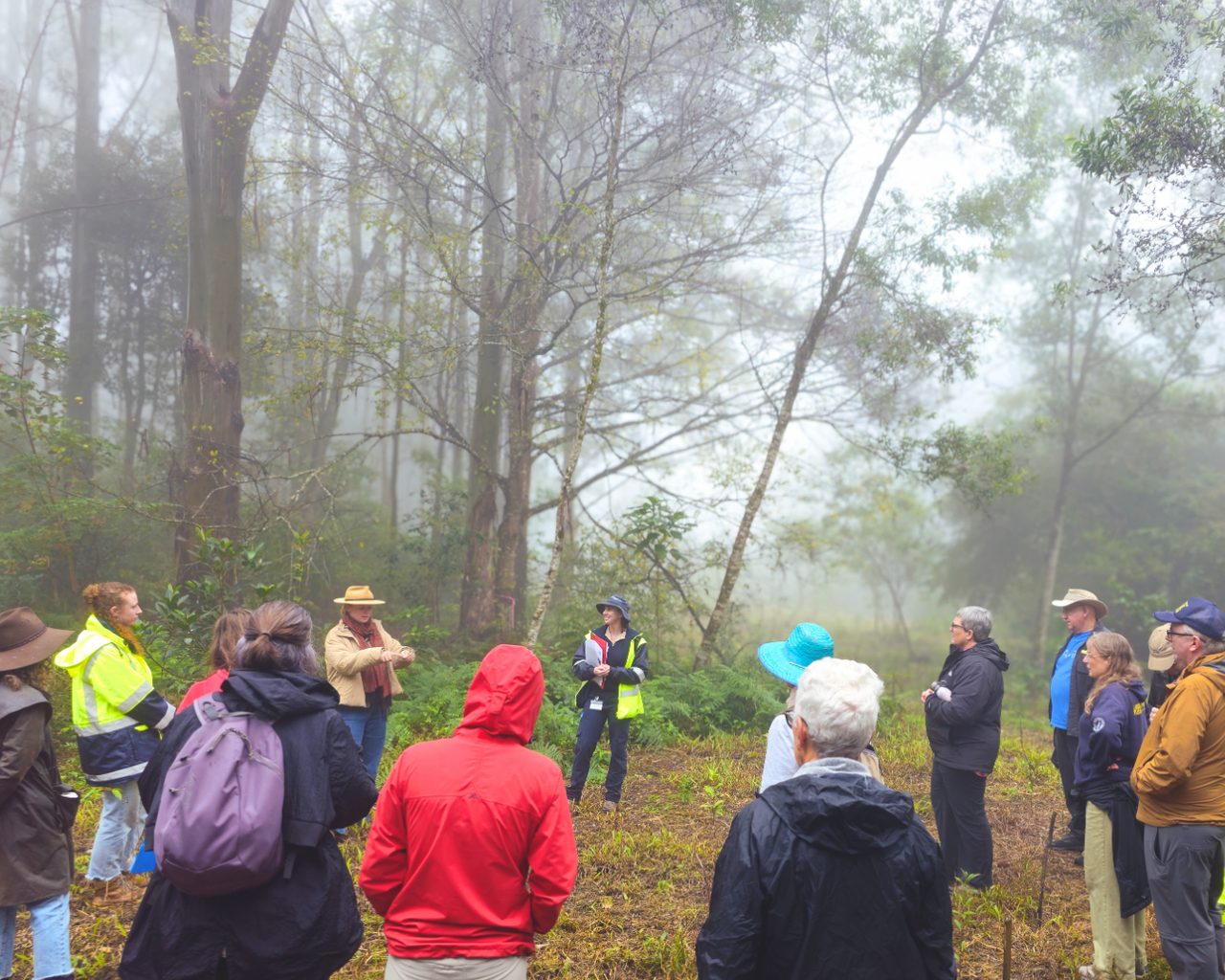
This series of four free guided walks use real-world examples of how the steps were applied to Council's Invasive Weeds Project Maleny demonstration site, which has been used to trial different combinations of weed management and restoration techniques.
- Project planning - 30 April
How to make your weed management plan, setting yourself up for success with the right goals, the importance of follow-up maintenance, essential restoration frameworks and principles. - Reading the landscape - 1 May
Understand what the land can tell you and how it'll guide your approach, utilising weeds to your advantage and how to prioritise your weeds, time and money. - Tools & techniques - 7 May
How to choose the right tools for your job, expanding your weed mangement toolkit, how to adapt to changes as they happen, combining and perfecting the timing of treatments. - Innovation and trial results - 8 May
Explore alternative techniques, where they're most effective and why, such as creek bank restoration using 'strip clearing', strangler figs for large weed trees, solarisation, transplanting 'native weeds' and tips for herbicide reduction.
Come to one or all four - choose what suits your needs. Attending all four events will give you an in-depth overview of how we undertook restoration works from start to finish, the rationale behind our choices and how we jumped problem-solving hurdles - moving away from prescriptive advice and instead 'teaching a man to fish'.
New technologies

Since 2021, The Invasive Weeds Project has been investigating innovative weed management technology, from boots‑on‑the‑ground methods to cutting‑edge tools including:
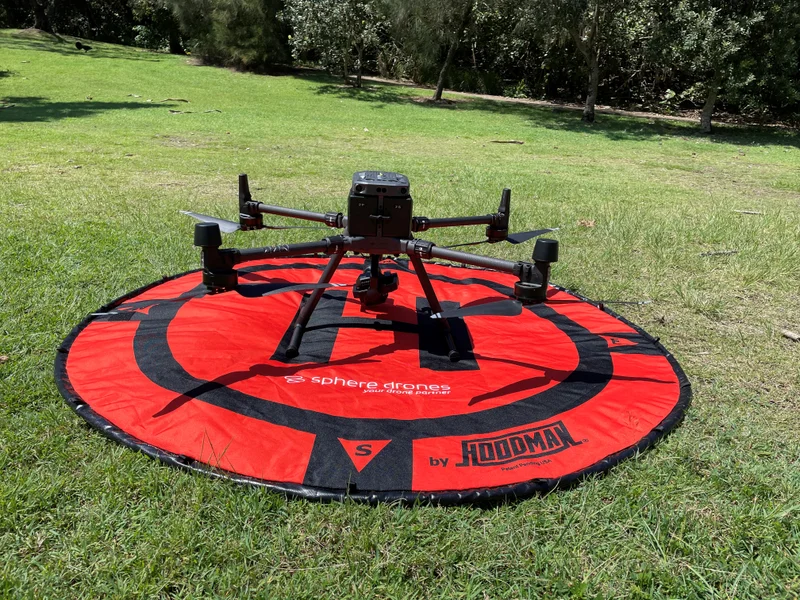
- AI‑assisted weed detection mapping using drones
- Environmental DNA (eDNA) water sampling to track weeds that spread undetected through our catchments
- A variety of alternative techniques to expand your weed management toolkit
Find out more about these technologies, view our Invasive Weeds Project StoryMap and explore the handy resource library on the Invasive Weeds project page.
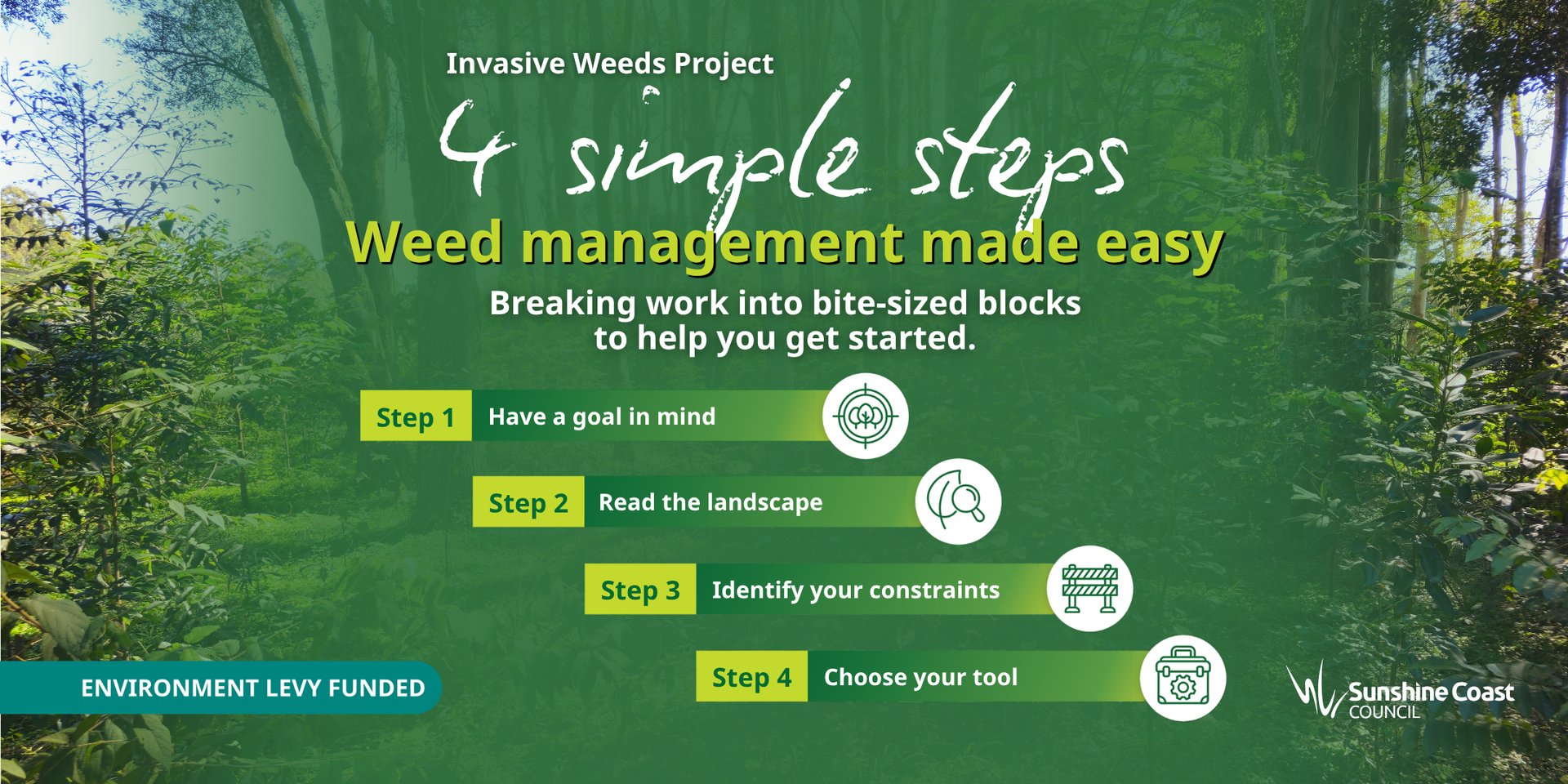
What are the four steps?
- Have a goal in mind. Clear goals keep your management efforts on track and helps prioritise what matters most, such as reducing weeds, creating habitat and slowing erosion.
Prioritise which weeds and areas need the most attention so you can make a bigger difference with less effort. - Read the landscape. Understanding the land will guide your approach and can be used to your advantage, things like sun exposure, terrain, water flow or existing vegetation.
Will removing the weeds solve the problem, or are they a symptom of something larger? - Identify your constraints. Be realistic about limits like time, cost, skills and weather to plan what’s achievable and find ways to bridge the gaps.
We can’t know everything - get connected with support networks for advice when challenges inevitably arise. - Choose your tools. Select tools and techniques to suit your situation and adapt to changes at each stage of the weed management journey.
Using combinations of treatments timed well can make a big difference in reducing your workload.

About the project
Sunshine Coast Council’s Invasive Weeds Project has been trialing a range of weed management techniques across demonstration sites and targeted research trials.
These projects aim to better understand which management approaches are most effective for controlling invasive plants while supporting the recovery of native ecosystems.
Through several years of monitoring and on-ground trials, several important learnings have emerged that can help guide weed management across the Sunshine Coast region.
The Invasive Weeds Project is funded by the Environment Levy