Alert for thorny invader that can puncture tyres
Council has detected the spiny, invasive honey locust plant in the Sunshine Coast hinterland. Have you seen this wanted invasive species?
Biosecurity Queensland
A fast-spreading invasive plant with spikes strong enough to puncture a car tyre has been found in our region, threatening our landscapes and biodiversity.
Council has recently detected honey locust (Gleditsia triacanthos including cultivars and varieties) plants around the Kenilworth and Conondale areas.
So far, honey locust has not become established in our region through monitoring and management, and it is prioritised for eradication.
Recently, Council has detected honey locust at:
- Kenilworth Bluff surrounds
- Kenilworth township
- Mary River south of Conondale.
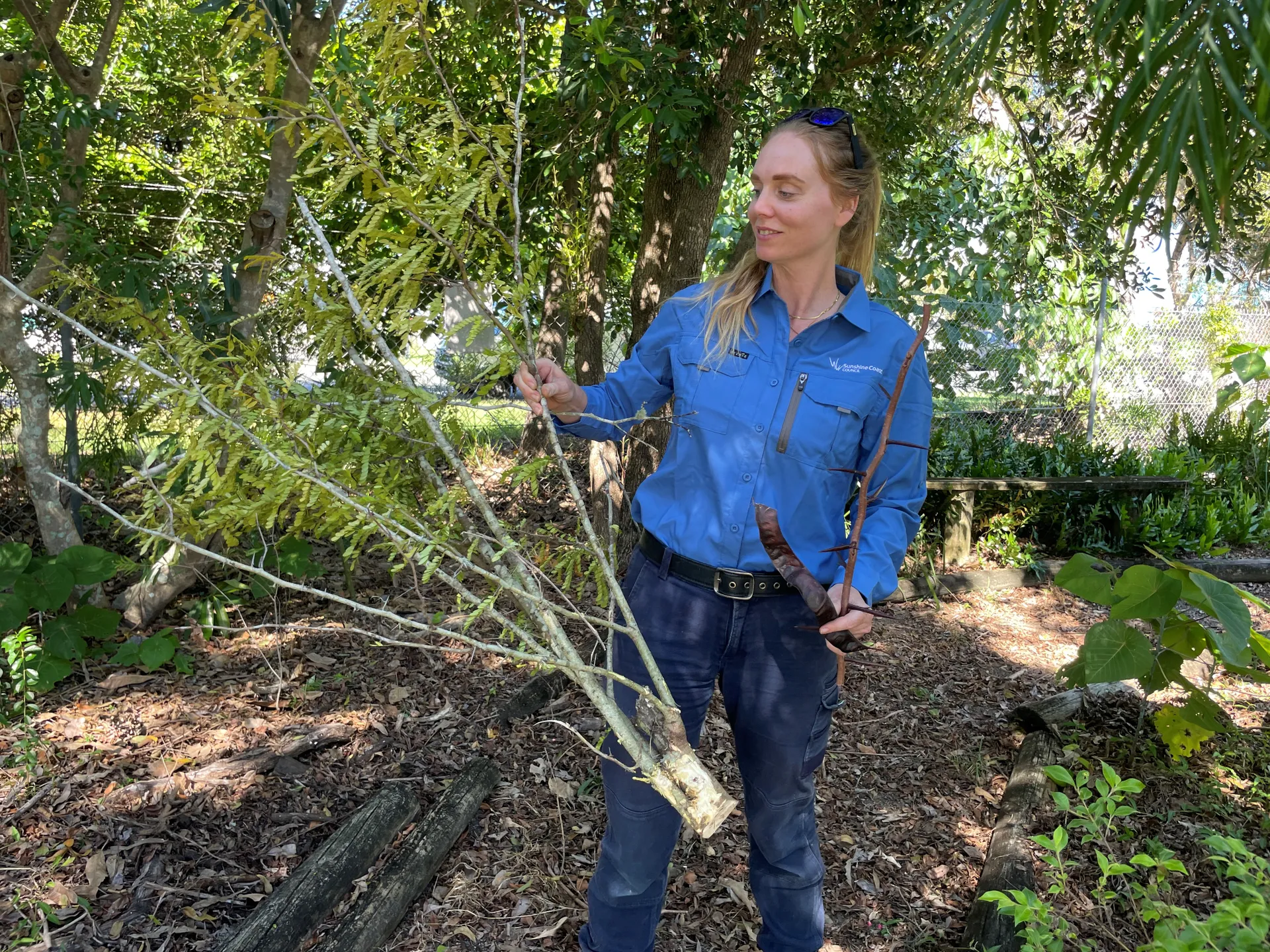
Contractors are working to remove honey locust in public areas, and private landholders must also eradicate honey locust from their properties, in accordance with state-legislated General Biosecurity Obligations.
Why honey locust is a problem
Honey locust is fast-growing and difficult to manage.
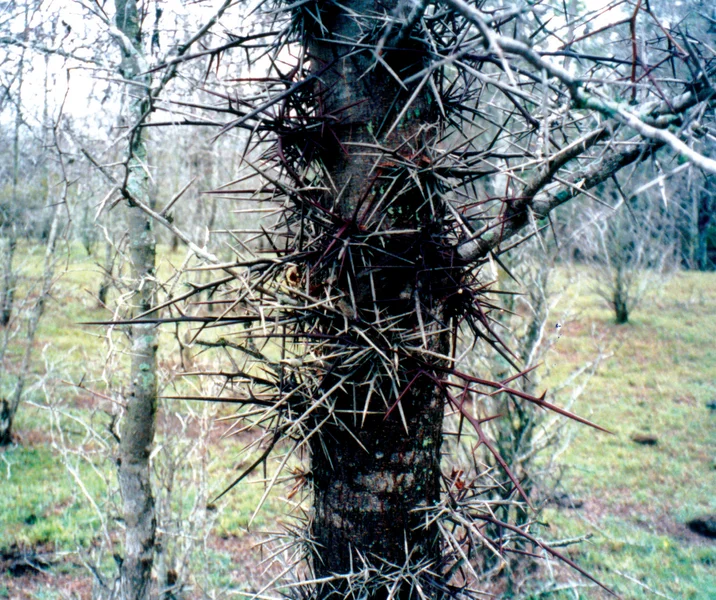
It forms dense, spiny thickets that can out-compete native vegetation, provide a haven for pests, and injure stock and humans.
They are covered in spikes that are strong enough to puncture a car tyre, posing a danger to livestock and people, especially anyone working to remove the plant.
It is a major threat to the environment and sustainable pasture production.
Despite the spikes, livestock may eat the seeds of the plant and spread it further, while seeds can also spread through waterways and ornamental plantings.
How to spot honey locust
Look for:
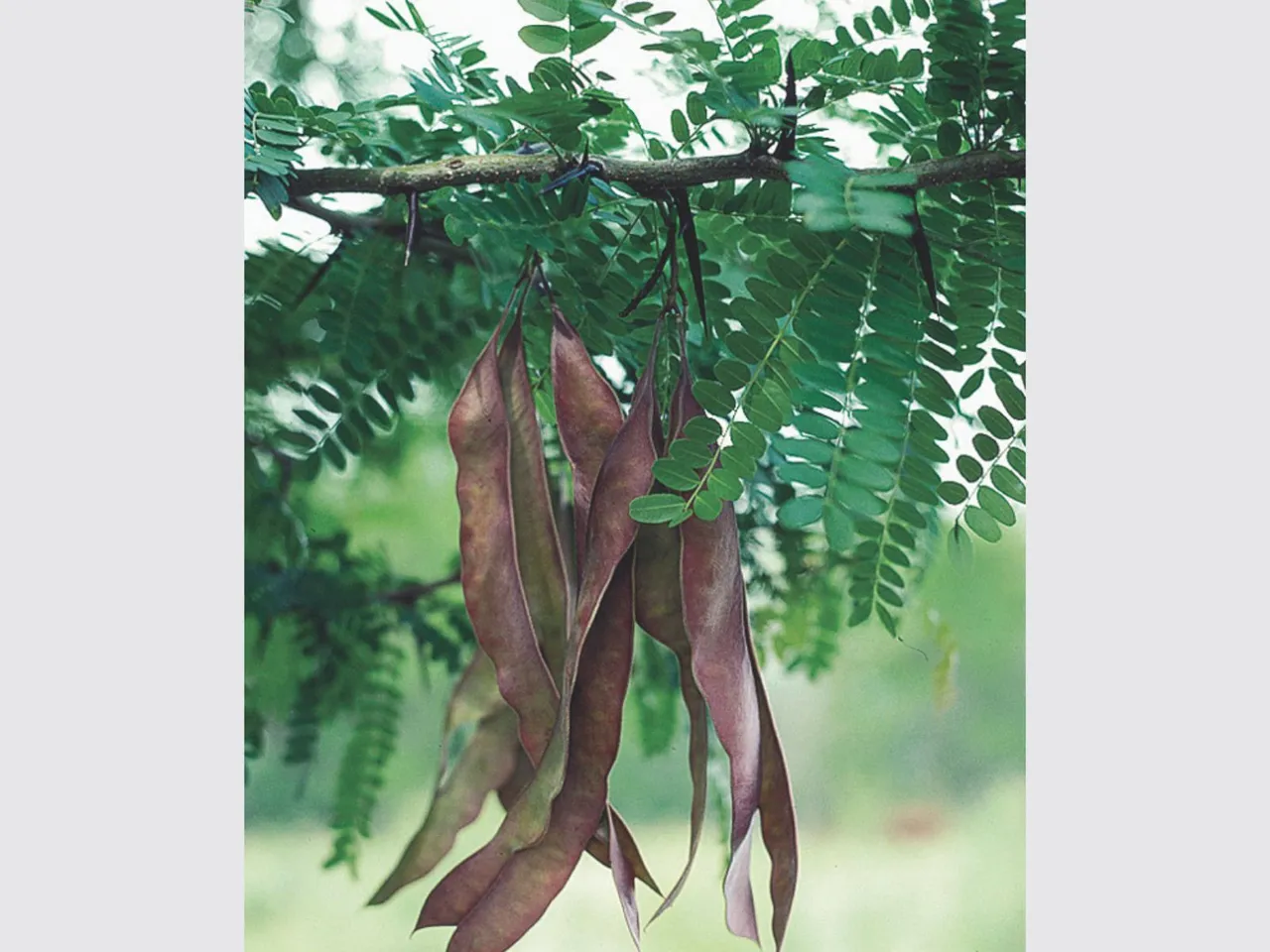
- bright green, fern-like leaves
- long seed pods
- dense thorns on branches or trunk
- clustered growth.
Report any suspected honey locust in our region immediately via the Sunshine Coast App or by contacting Council.
By eradicating outbreaks of honey locust, we can help keep our region safe for people, livestock and wildlife while supporting our farmers and natural areas.
Learn more about our region’s priority invasive plants on Council’s website.