Bushfire season starts now – time to prepare
Bushfire season is officially here, and experts warn a wet winter doesn’t reduce bushfire risk. Extra rainfall leads to more vegetation growth, creating additional fuel as temperatures rise and conditions dry out. Prepare now – learn how fire behaves, prepare an emergency kit and create a bushfire plan.
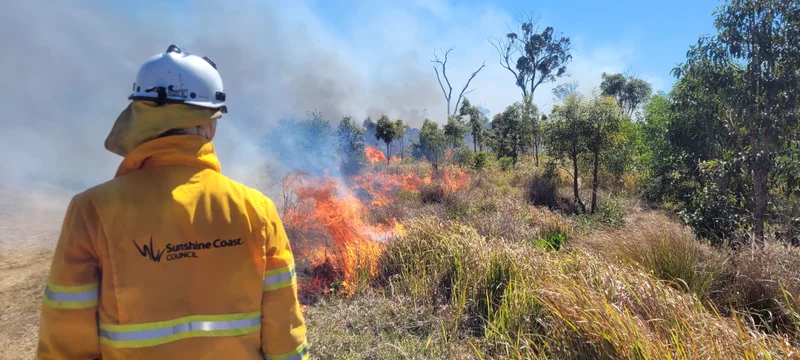
When a fire is approaching you only have minutes to act.
Sunshine Coast’s bushfire season has arrived, bringing with it a timely reminder that preparation today can help protect lives, homes and communities, tomorrow.
Chair of the Sunshine Coast Local Disaster Management Group (LDMG), Mayor Rosanna Natoli, said that while it has been a wetter than average winter, experts are warning that doesn’t reduce bushfire risk.
“Extra rainfall leads to more vegetation growth, creating additional fuel as temperatures rise and conditions dry out, which increases bushfire risk,” Mayor Natoli said.
“Preparation is the most effective way residents can protect themselves, their families and their property.
“It is too late when you smell smoke – do your bushfire homework now.”
“Learn how fire behaves, put together a summer emergency kit and make an emergency plan.
“Familiarise yourself with Council’s Disaster Hub for important links and up-to-date information.
“A well-prepared home is easier to defend and reduces the risk to surrounding properties too.”
First-hand bushfire experience
Council’s Disaster Management Coordinator Jason Membrey said local firefighters respond to bush and vegetation fires at Sunshine Coast and Noosa almost daily during fire season.
“Last financial year the Queensland Fire Department (QFD) and Rural Fire Service Queensland, responded to 627 bush and vegetation fires and 356 the year before – that’s a steady increase,” Mr Membrey said.
“During the severe 2019 bushfire season conditions escalated quickly.
“The Peregian fire burned approximately 366 hectares, destroying one home and severely damaging another.
“The event required the response of more than 100 fire crews and prompted the evacuation of thousands of residents, serving as a powerful reminder that bushfires can develop rapidly and threaten homes, businesses and community infrastructure,” Mr Membrey said.
Know your bushfire risk
Bushfires are influenced by vegetation, topography and weather conditions, which can affect their size, intensity, speed and predictability. They can occur when vegetation ignites and burns through reserves, national parks, private property and urban areas, particularly during hot and dry conditions.
Residents can check their level of bushfire risk using the QFD postcode checker and learn more about local hazards through Council’s Disaster Hub.
Prepare your property
Council and QFD are advising property owners to understand their bushfire risk and make changes that reduce potential impacts.
Simple actions include:
- Mowing lawns regularly
- Removing excess flammable debris
- Trimming overhanging and low-lying branches
- Clearing gutters and roofs of leaf litter
- Removing flammable items from around homes
- Maintaining firefighting pumps, generators and water systems
- Ensuring house numbers are clearly visible and
- Ensuring property emergency vehicle access.
Have a Bushfire Survival Plan
Bushfires can move quickly and unpredictably. Residents may have only minutes to leave safely if conditions worsen.
Questions to consider:
- Will you leave early, or stay and defend?
- What will you do if travel routes are cut off?
- What happens if family are away from home?
- What if you are at work?
- How about pets and livestock?
Residents should also prepare an emergency kit, check first aid supplies, ensure insurance policies are current and stay informed through official warnings and alerts.
Stay informed
Bushfires can cause significant property damage, threaten lives and create hazards from smoke, embers and radiant heat.
Embers can travel kilometres ahead of a fire front, while smoke can reduce visibility and affect air quality.
Residents are urged to monitor official warnings and act early when advised.
For bushfire preparedness information, current warnings and planning resources, visit the Sunshine Coast Disaster Hub, Get Ready Queensland and the Queensland Fire Department websites.